

Discover the tree-derived material behind Chinese lacquer art—and how understanding it can deepen your appreciation of a finished piece.
A beautiful object often catches our attention through its surface: a rich colour, a flowing line, or a reflection that shifts as we move. We notice its appearance first. The material behind it may be less familiar.
With Chinese natural lacquer, that material has a story of its own. Before it becomes the surface of a finished object, it begins as sap from a tree. Understanding this transformation is the first step towards appreciating lacquer craft—and the choices that give each piece its character.
It Begins with a Tree
Chinese natural lacquer, known in Chinese as daqi (大漆), is a traditional material obtained from the lacquer tree, Toxicodendron vernicifluum. Harvesters make controlled cuts in the bark and collect the sap that emerges. This tree-derived material is used in lacquer traditions across China, Japan and Korea. Source: Asian Art Museum

“Lacquer” Describes More Than One Material
In everyday English, “lacquer” can refer to several kinds of surface coating. A glossy finish alone therefore does not tell you whether an object contains natural lacquer.
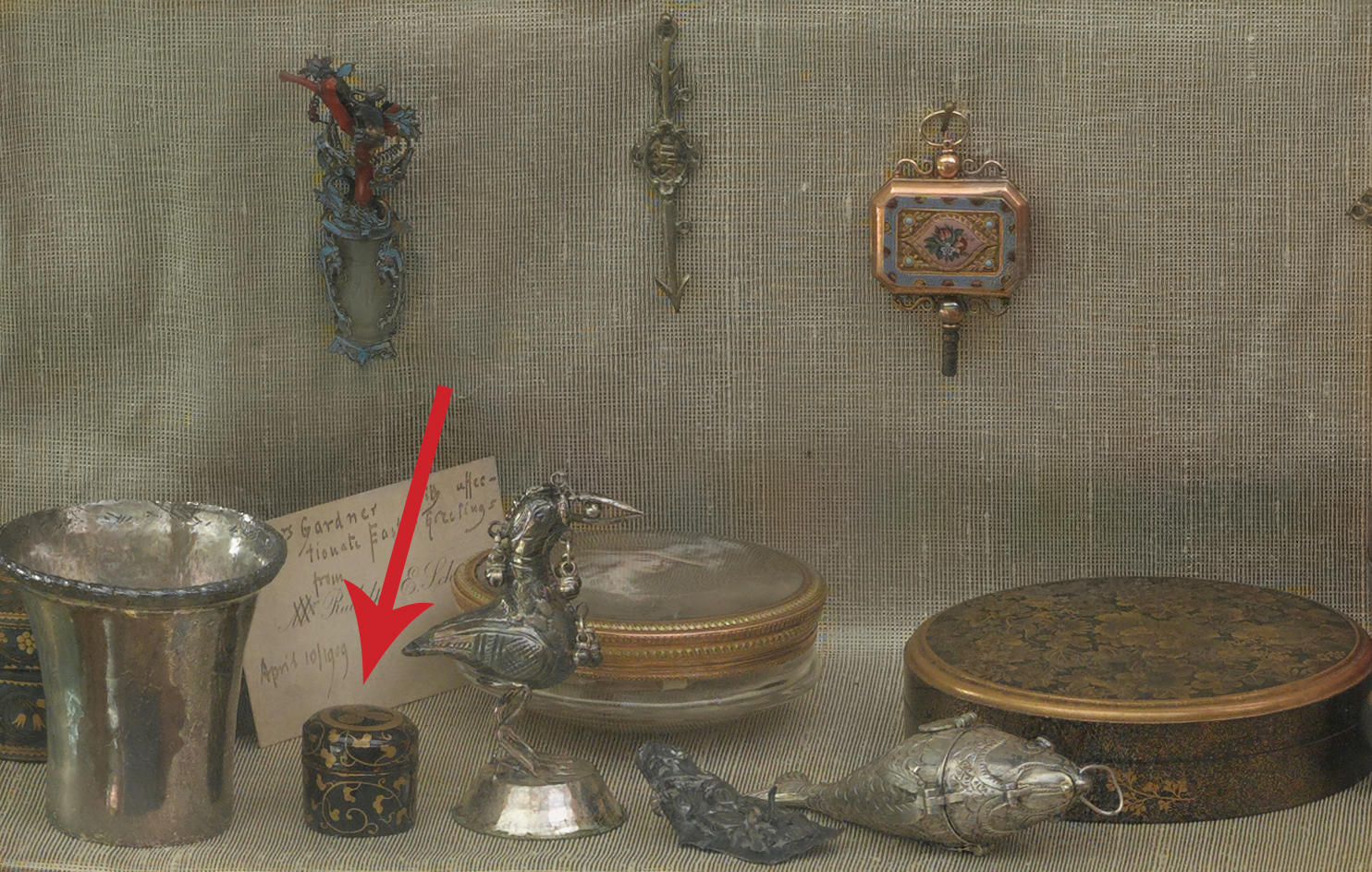
Traditional East Asian lacquer is specifically a sap-derived material. After processing, it can be applied to surfaces including wood, metal, cloth and paper. A lacquered object may contain several materials beneath its visible finish, so its construction matters as much as its appearance. Source: Isabella Stewart Gardner Museum

When choosing a piece, look for a clear description of both the coating and the underlying material. “Lacquered wood,” for example, tells you something that “glossy finish” does not. Good material descriptions make it easier to understand what you are buying.
How Sap Becomes a Finished Surface
One of natural lacquer’s most distinctive properties is how it hardens.
Rather than simply becoming dry through solvent evaporation, it undergoes a chemical curing process in a damp environment. This transformation turns the wet material into a hardened coating. Source: Victoria and Albert Museum
Traditional lacquer work often involves applying thin layers, allowing them to harden, and repeating the process. Depending on the technique, polishing may also form part of the work. Source: Isabella Stewart Gardner Museum

This helps explain why the final surface reveals only part of the making. Preparation, application and finishing all deserve attention. The number of layers and the production time vary between objects; they should be explained for the particular piece rather than assumed.
One Material, Many Artistic Possibilities
Daqi is a material, rather than the name of a single decorative technique.
Chinese lacquer art includes painted decoration, inlay and carved lacquer. In carved lacquer, makers build up layers of lacquer and carve into them to create relief designs. Other techniques produce very different surfaces. Source: The Metropolitan Museum of Art
Box with pommel scroll design, China, 16th century. Carved black and red lacquer. The Metropolitan Museum of Art. This example illustrates carved lacquer. Image: CC0. Image source.

Knowing this distinction makes lacquer easier to explore. Two pieces can belong to the same material tradition while differing greatly in texture, pattern and method.
A Long History, with Room for New Design
Lacquered objects found in China date back to the Neolithic period. Over time, makers developed increasingly elaborate ways to decorate and shape lacquer surfaces. Source: The Metropolitan Museum of Art
That history offers a useful starting point for looking at contemporary work. Ask how the maker has chosen to use the material today. What does the shape contribute? How does the pattern relate to the object? Which details become apparent when you look beyond the first impression?
You do not need specialist knowledge to begin. Curiosity and careful observation are enough.
Durable, with Care in Mind
Properly cured natural lacquer forms a tough coating. Its long use in decorative and functional objects reflects that useful quality.
Durability still comes with care requirements. Prolonged light exposure can damage lacquer and reduce its sheen. Raw, uncured lacquer can also irritate skin, so working with it requires appropriate precautions.
For a finisheSod product, follow the maker’s specific instructions. Suitability for food contact, heat, water or skin contact depends on the complete product and its intended use.
Looking Beyond the Surface
Understanding daqi gives you more ways to appreciate a lacquer piece. You can consider its material, construction, decorative technique and finishing, alongside the colours that first drew your attention.
In our next article, we will explore lacquer water-marbling: how a pattern takes shape on water and is transferred onto an object. With the material introduced, we can look more closely at the process behind those flowing lines.
0 comments